If you buy compact diesel machinery from an Asian manufacturer for resale or for your own fleet, engine emissions certification is the single most common place deals go wrong. A machine that cannot prove compliance in your jurisdiction is not a discounted machine — it is an unusable one, and sometimes a seized one.
The standards you will actually see quoted
United States — EPA. Off-road compression-ignition engines are regulated by the EPA. For the small-engine power bands typical of compact track loaders and mini excavators (roughly 19–56 kW and 56–130 kW) the current requirements sit at the Tier 4 stage. Expect after-treatment: diesel oxidation catalyst, and on the higher bands a particulate trap. Engine-out solutions with no trap are only legal on the lowest bands.
European Union — Stage V. Regulation 2016/1628 governs non-road mobile machinery. Stage V is in force, it tightened particulate number limits as well as mass, and it closed several previous gaps for the 56–130 kW and 130–560 kW bands. It also introduced Gen Set-specific rules.
Other markets. Canada aligns with EPA but is administered by Natural Resources Canada/Environment and Climate Change Canada. Japan, South Korea, China and India all have their own stages, and Australia/NZ largely reference EPA and EU values.
What a compliant claim should look like
Any supplier can write “EPA approved” on a listing. Here is what makes the claim verifiable:
- The engine brand and exact model, not just “diesel engine”. Almost all legitimately compliant small machinery uses a nameplate engine — Kubota, Yanmar, Perkins, Doosan, Lombardini, Farymann, or a well-documented Chinese unit — because the engine, not the machine, carries the certificate.
- The EPA emission control information label. On a compliant US engine this is a permanent label on the engine itself with the family name, engine model, certification label date, and the “this engine complies with EPA regulations” statement plus the manufacturer name. Ask for a photo of the label on the actual unit being shipped, not a PDF mock-up.
- EU type approval number for Stage V, with the engine family reference and the WMI/approval mark.
- The certificate holder. If your machine builder is not the engine manufacturer, the engine maker holds the certificate and the machine inherits it. Ask who holds it and confirm the engine model in your invoice matches the certified model exactly.
Red flags
- A price well below market with “EPA” in the listing but no engine brand named.
- Generic paperwork, or a certificate for a different engine family than the one being shipped.
- Offers to “remove the DPF for easier starting” or “delete the trap for less maintenance”. That is illegal tampering in both the US and EU, voids the certification, and transfers liability to you.
- No explanation of how and where the label is affixed.
Documents to require before payment
- Commercial invoice and packing list showing exact engine model and serial ranges.
- Photo of the emission control label on the shipped unit.
- Engine certificate or type approval reference, with issuing authority.
- Statement of conformity / compliance declaration naming the standard and stage.
- Machine manual and parts list, with the warranty terms for the after-treatment system.
Import duties and the machine itself
Emissions compliance is separate from customs classification, but both are documented on the same invoice. Get the HS code confirmed in writing — compact track loaders and mini excavators fall in different headings, and duty rates differ. Confirm country of origin declarations too, since they affect both duty and any anti-dumping measures in force.
What KERD ships
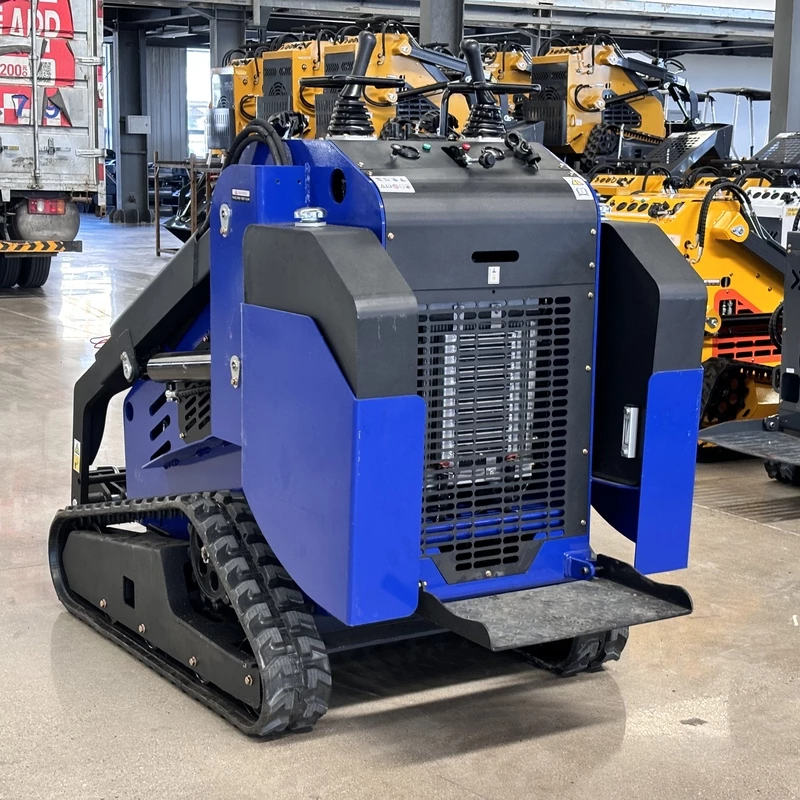
Our compact track loaders are offered with EPA-certified and Euro Stage V diesel engines as standard configurations, with the engine brand and model named on the quotation and the emission label photographed on the unit before it leaves the factory. If you are importing into a market we have not listed, tell us the country and we will confirm the applicable stage before you commit.