Undersizing a skid steer is expensive in a way you only discover in month three: the bucket full of wet gravel you cannot carry, the pallet you cannot stack, the truck bed you cannot unload. Here is how to size one properly before you order.
Start from the heaviest single thing you lift
Not the average load. The heaviest one you handle more than occasionally. Write down the pallet weight including the pallet itself, the full bucket of your densest material, the attachment you plan to run most.
Then apply the industry rule of thumb: your rated operating capacity should be about 50 percent of the machine’s total weight if you want real stability with a full load, and never buy a machine whose rated capacity equals your peak load with no margin.
Understand what rated operating capacity actually measures
ISO 14325 rated operating capacity is measured at a specific load point, at a specific height, on firm level ground, and it already assumes a tipped machine at 60 percent of tip load. Two machines can share a rated capacity and feel completely different, because tip load depends on wheelbase and counterweight design.
- Rated operating capacity — what the standard says the machine can lift at the load point.
- Tip load — the load at which the rear wheels or tracks lift off. Roughly 1.67x rated capacity by the ISO calculation.
- Actual capacity at height and reach — drops as the load moves away from the machine. A bucket curled in carries fine; the same load on a grapple held high and out does not.
Lift path: vertical versus radial
Vertical lift keeps the load close to the machine through the whole arc. Better for stacking, loading truck beds, working against walls, and carrying dense material. Expect slightly less reach.
Radial lift swings the load out and up on an arc. Better reach for digging out and for loading a high-sided hopper from a distance, and usually a bit more digging force. Slightly less stable with heavy loads at height.
Most general contractors and landscape crews are better served by vertical lift. Most farm and aggregate handlers can use radial.
Platform height and dump height
Match platform height to the highest thing you load. A 2.4 m hopper needs roughly 3.0 m of platform height to clear the side with a bucket full. Measure your truck box, your hopper wall, your retaining wall cap — then add 300–400 mm.
Wheels or tracks
- Wheels: faster on pavement, cheaper, easier to service, best on hard, dry, level ground. They rut turf and float poorly in mud.
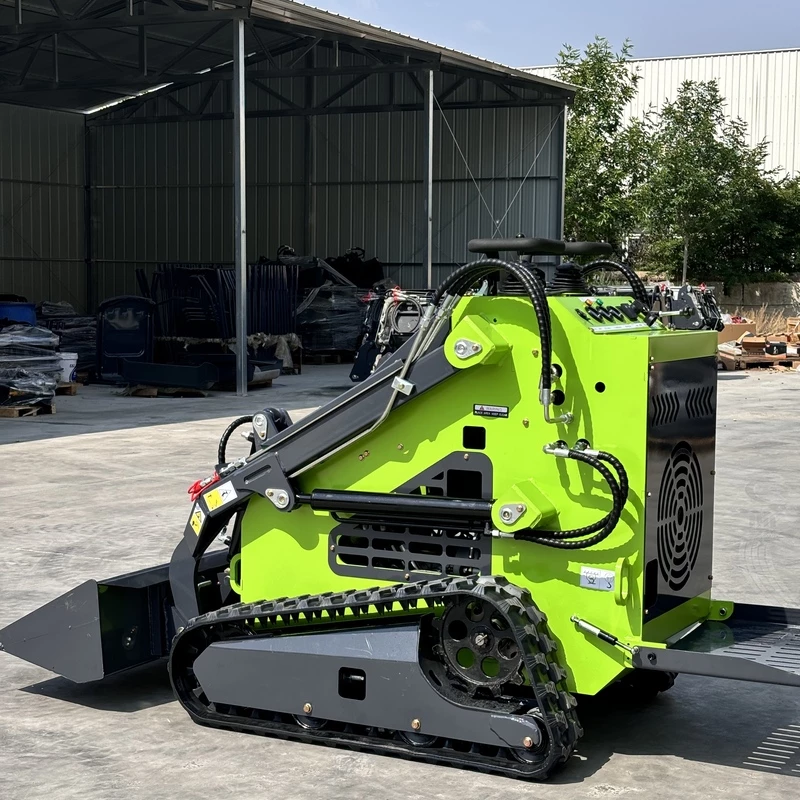
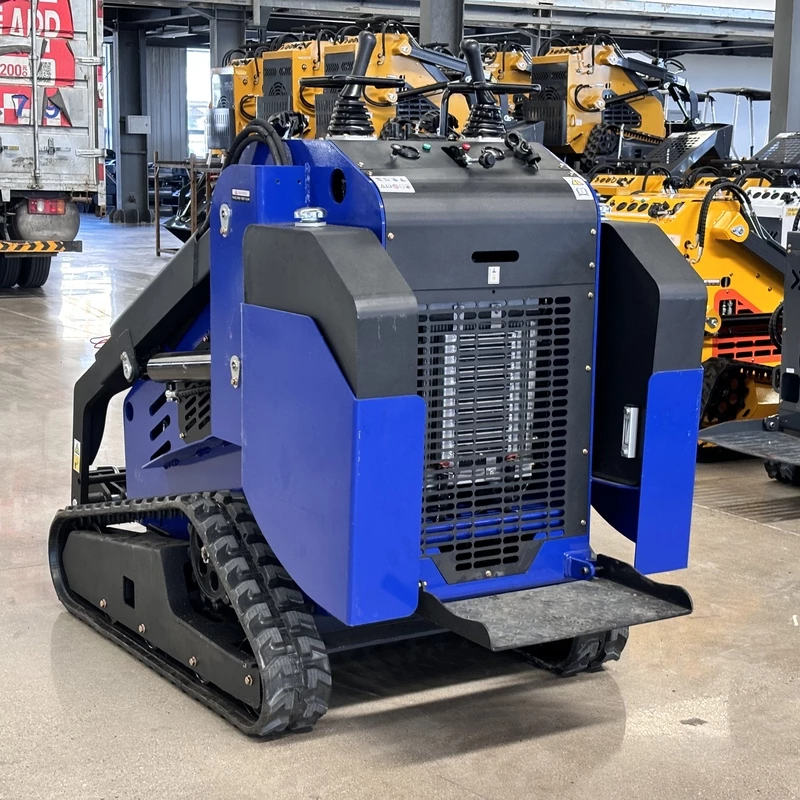
- Rubber tracks: low ground pressure, better traction, longer component life in abrasive conditions, gentler on finished surfaces. Higher cost, and track replacement is a real line item.
If more than a third of your hours are on grass, sand, mud or a site you have to not damage, tracks pay for themselves.
Worked example
A landscape contractor lifts 700 kg pallets of stone, loads 1.5 m truck boxes, works partly on installed turf and partly on gravel yards, and wants a post driver and auger.
- Heaviest single load: 700 kg → minimum 1,000 kg rated operating capacity with margin.
- Turf hours → compact track loader.
- 1.5 m box side → about 2.1 m platform height, vertical lift.
- Auger and post driver → confirm auxiliary hydraulic flow and pressure at the attachment, not just the machine’s headline numbers.
That lands squarely in the 1,400 kg class. The KERD S70 tracks at 1,400 kg EPA diesel, for instance, is built for exactly this profile.
Send us your numbers
Tell us your heaviest load, your highest lift, your ground conditions and your attachments. We will spec the class and the configuration rather than guess from a brochure.