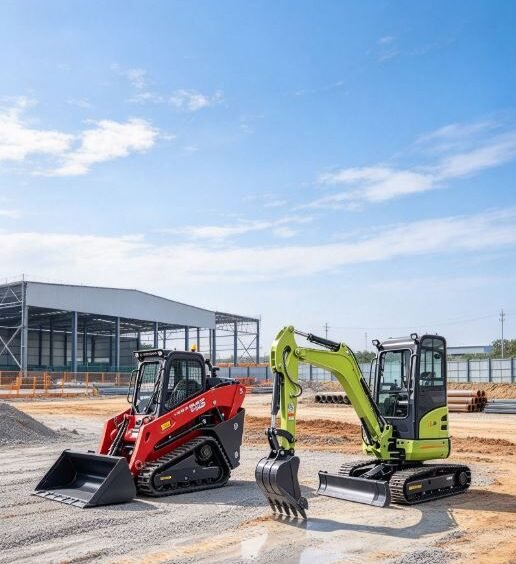
One of the most common questions we get from contractors and farm owners is whether they should buy a mini excavator or a skid steer loader. Both are compact, both trailer easily, and both can dig. The right answer depends on what you dig, how far you carry, and how much of your work is above ground.
Where the mini excavator wins
An excavator is built around the dig. Its boom, arm and bucket geometry give it two things a skid steer physically cannot match: digging depth and reach.
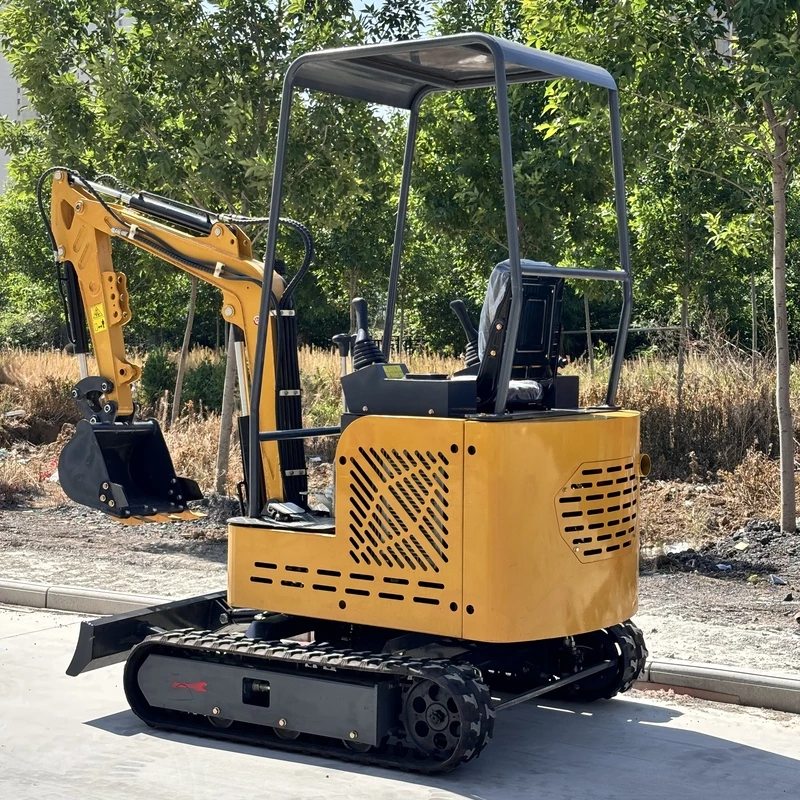
- A 1.5-ton class crawler excavator such as the KERD Model 17 digs past 2.4 m (about 8 ft). A skid steer in the same weight class digs maybe 100–150 mm below grade with a bucket, and only because the lift arms let it.
- The 360-degree rotating upper lets you swing spoil onto one side of a trench without repositioning. On a long trench run this alone saves hours a day.
- Outriggers and a dozer blade give a stable footprint for deep, steady digging on soft ground.
If your work is trenches, footings, pond work, tree planting or any task where you need to get well below grade and reach over an obstacle, the excavator is the tool.
Where the skid steer wins
A skid steer is built around material handling: scoop, carry, dump, repeat.
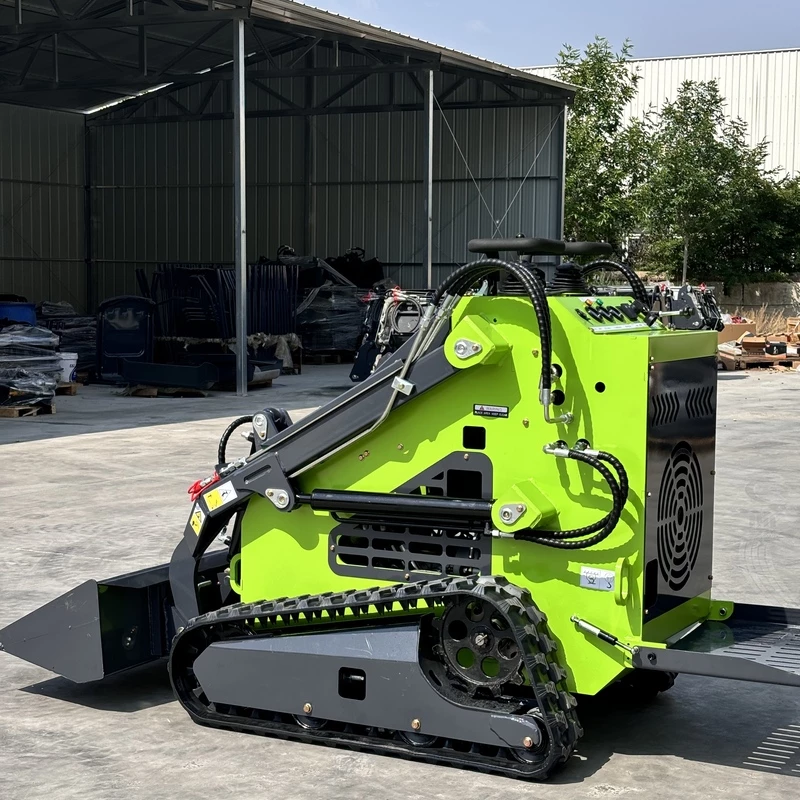
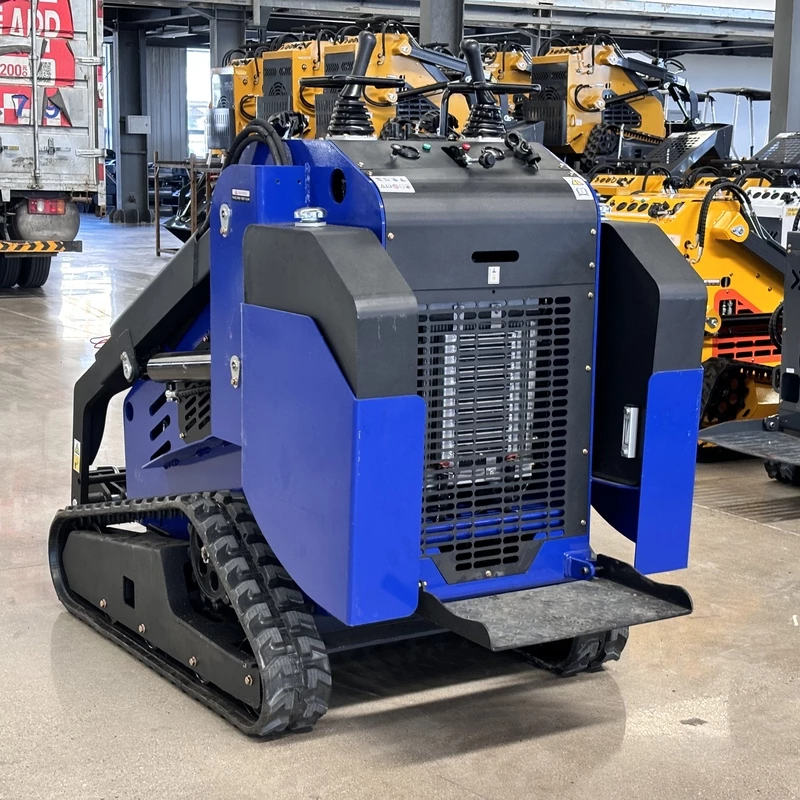
- Rated load. Compact track loaders in the 1,000–2,000 kg class lift and carry far more than a mini excavator of the same shipping weight. Bucket, pallet fork and grapple work is squarely in its lane.
- Attachments. On a universal quick-attach plate you can go from bucket to auger to breaker to flail mower in a couple of minutes, with no hydraulics re-plumbing in most cases.
- Ground pressure. Rubber tracks spread the load, so a compact track loader works on lawns, muddy fields and finished surfaces where a wheeled machine would rut or a heavier excavator would sink.
- Maneuvering on flat ground. Zero-turn skid steering is faster than walking an excavator around a site, and it travels under its own power between jobs on the same trailer.
The deciding questions
| How deep do you go? | Below roughly 1.2 m regularly → excavator. |
| How much do you move? | Carrying pallets, gravel, snow or soil across a site → skid steer. |
| How many attachments? | Four or more across the season → skid steer. |
| What is the ground? | Grass, turf, wet soil → compact track loader or wheeled skid steer. Rock, demolition pad → steel-track excavator. |
| Do you trailer it? | Both do, but a skid steer can be driven on and off without a ramp setup as delicate as an excavator’s. |
What most buyers actually need
For a mixed crew that does some trenching and a lot of cleanup, the honest answer is often both — a 900 kg to 1.6 t mini excavator for the digging and a compact track loader for the moving. Total cost is usually less than one mid-size wheeled excavator, and the two machines cover each other’s weak points.
If you have to start with one, price out a week of your typical jobs. Count how many hours are spent below grade versus how many are spent carrying material. That ratio decides it more reliably than any spec sheet.
Our team can match a machine to your specific site conditions, lift requirements and transport constraints — send us your job list and we will spec it.